





Thursday, 04 June 2026 09:28 AM
Product Announcements
ECM100, the latest engineering technical note from ECM's R&D team led by Dr. Steven Shaw, Ph.D., shows how eliminating cogging torque at the motor level is the key to building haptic systems, robots, simulators, and interactive systems that feel genuinely natural to the humans using them.
NEEDHAM, MA / ACCESS Newswire / June 4, 2026 / ECM PCB Stator Tech, a U.S. leader in next-generation electric motor design innovation, today released ECM100: Air-Core Motors for Haptic Applications. Authored by ECM's Research & Development Team, led by CTO Steven Shaw, Ph.D., ECM100 is the latest in a planned series of engineering technical notes on real-world applications for ECM's axial flux PCB stator technology. As robotics, simulation, and human-interactive systems move from controlled industrial environments into direct contact with people, the quality of physical interaction has never mattered more. ECM100 makes the case that the electric motor is where that quality is won or lost.
Humanoid robots, rehabilitation devices, cobots, and advanced simulators all share a common challenge: the motors that drive them leave a mechanical fingerprint that humans can feel. Cogging torque, the repeating magnetic detent effect inherent in conventional permanent magnet motors, creates a notchy, jerky resistance that breaks the illusion of smooth, natural motion. Engineers have worked around it for decades with magnet skewing, feedforward compensation, and mechanical compliance elements, but none of these approaches eliminate the problem and each introduces its own tradeoffs in cost, complexity, and control bandwidth. For applications where precise, transparent force feedback is the product, workarounds are not enough.
ECM's air-core PCB stator architecture eliminates cogging torque at its source. With no soft magnetic material in the stator, there is zero interaction between the rotor magnets and the stator structure, and therefore zero cogging. A sinusoidal back-EMF further minimizes torque ripple, and the highly linear torque-to-current relationship means the controller has complete, predictable authority over what the user feels. The motor stops being a mechanical constraint and becomes a transparent medium through which software can shape human experience.
Proven at Commercial Scale: Partnership with Thrustmaster
The commercial viability of ECM's approach is already established. ECM's partnership with Thrustmaster produced the T598 direct-drive sim racing wheel, released to market in October 2024. A direct-drive racing wheel is one of the most demanding haptic applications in consumer electronics: with no gearbox between the motor and the driver's hands, every imperfection in torque output is felt immediately. The T598 demonstrates that ECM's zero-cogging platform can be taken from engineering concept to mass-produced commercial product, delivering the smooth, immersive force feedback that competing motor architectures cannot match.
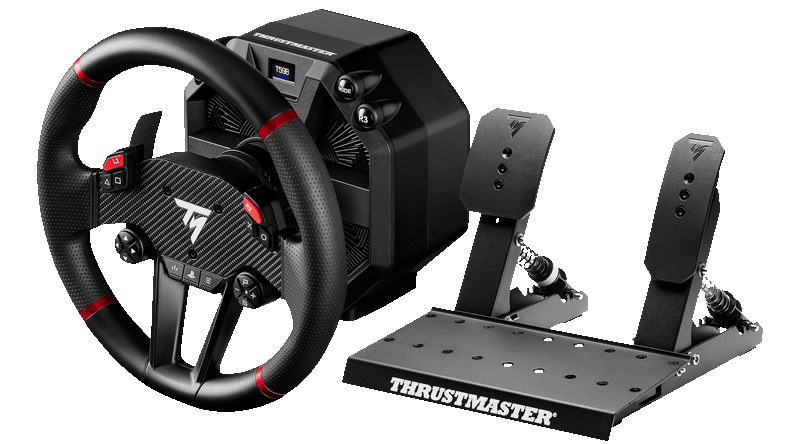
Thrustmaster T598 features a PCB Stator Motor
From Fitness Equipment to Robotics: A New Design Space
ECM100 presents three further demonstrations that map the breadth of the opportunity. A smart rowing ergometer integration shows how an ECM motor-controller system can reproduce the exact drag characteristics of a fan-based machine in software, with resistance profiles that are fully programmable and reconfigurable in firmware. Unlike a fan whose aerodynamic law is fixed, the ECM system can switch between fan, fluid, or water-surface emulation and even link multiple machines to simulate the cooperative dynamics of real on-water rowing. A level of shared human experience that mechanical systems simply cannot deliver.
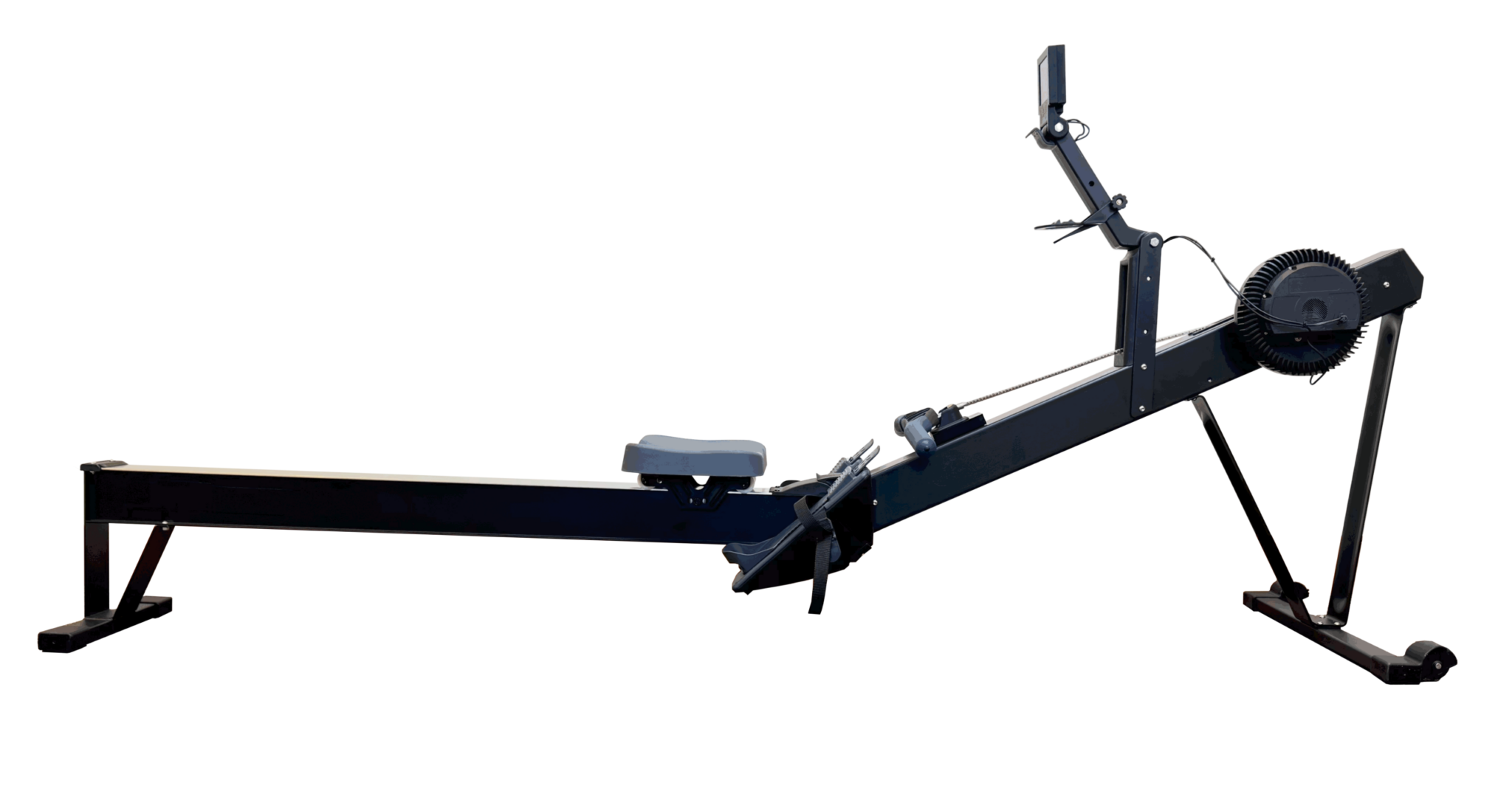
Smart rowing ergometer features a PCB Stator Motor which replaces the conventional fan
A cable-driven weightlifting machine demonstrates how programmable motor torque faithfully emulates the feel of lifting a physical weight. Near-zero cogging and a low electrical time constant deliver ultra-quiet, high-bandwidth tension control at high force and near-zero speed, with none of the granular feel that cogging torque would otherwise introduce.
For robotics specifically, ECM's delta robot demonstration is the most direct expression of the human-machine interaction opportunity. Three shelf-stock ECM servo motors drive a parallel linkage mechanism that a user can physically manipulate with near-zero resistance, while the controller actively compensates for gravity and enforces smooth virtual workspace boundaries. The result is a robot that feels weightless and natural in the hand - a direct demonstration of what becomes possible when the motor's own mechanical signature stops getting in the way of what the designer is trying to create. Applications ranging from rehabilitation devices and force-feedback controls to precision instrumentation and human-interactive robotics all stand to benefit.
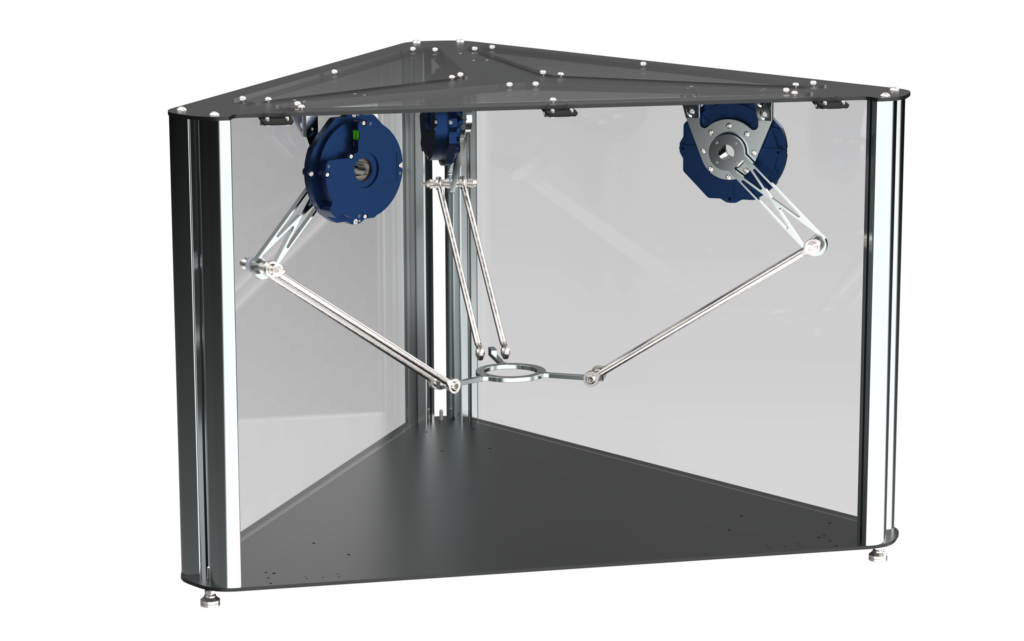
Watch Delta Robot Demonstration featuring three shelf-stock PCB Stator servo motors.
As the robotics industry scales toward systems that work alongside and in direct contact with people, the bar for motion quality will only rise. Cogging torque, friction, and torque ripple that were acceptable in industrial automation become unacceptable when a human is holding the end effector. ECM100 provides the engineering framework and real-world evidence that air-core PCB stator technology is ready to meet that bar, across applications from consumer fitness to precision instrumentation and human-interactive robotics.
What Engineers Will Find in ECM100:
A clear explanation of how cogging torque arises in conventional motors, why existing mitigation techniques fall short in human-interactive applications, and how ECM's air-core architecture eliminates the problem at the source
Mathematical framework for emulating fan-based rowing ergometer dynamics with a software-defined motor controller, including a multi-rower synchronization model
Control laws and system models for cable-driven weightlifting machine integration, including capstan drum and wound spool configurations for constant tension across varying cable geometry
Gravity compensation and virtual boundary control implementation for a delta robot haptic interface, demonstrating near-zero-impedance free-space motion and smooth workspace constraint rendering
Real-world performance data from ECM's prototype integrations including the Thrustmaster T598 direct-drive racing wheel, released commercially in October 2024
Availability
ECM100 is available now at www.pcbstator.com. Engineers working on haptic, robotics, simulation, rehabilitation, fitness, or any application where humans interact directly with a motor system are encouraged to download ECM100 and explore how air-core PCB stator technology can deliver the quality of motion their applications demand.
About ECM PCB Stator Tech
ECM PCB Stator Tech delivers the only full-stack platform for electric motor innovation, empowering partners to design, prototype, and optimize next-generation PCB Stator motors with precision and speed. With PrintStator Motor CAD and patented axial flux hardware, ECM enables the development of compact, efficient, and quiet motors for applications across HVAC, pumps, robotics, e-mobility, consumer electronics, aerospace, and more. ECM maintains offices in Boston (MA) and Bozeman (MT), with business development representatives in Europe. For more information, visit www.pcbstator.com.
Sales Inquiries
Chris Fielding - VP Applications Engineering - [email protected]
Michael Fischer - EVP of Global Sales and Marketing - [email protected]
Media Inquiries
ECM PCB Stator Tech
Sam Jones - Director of Marketing and Communications
[email protected]
www.pcbstator.com
+1.617.340.3241
SOURCE: ECM PCB Stator Tech